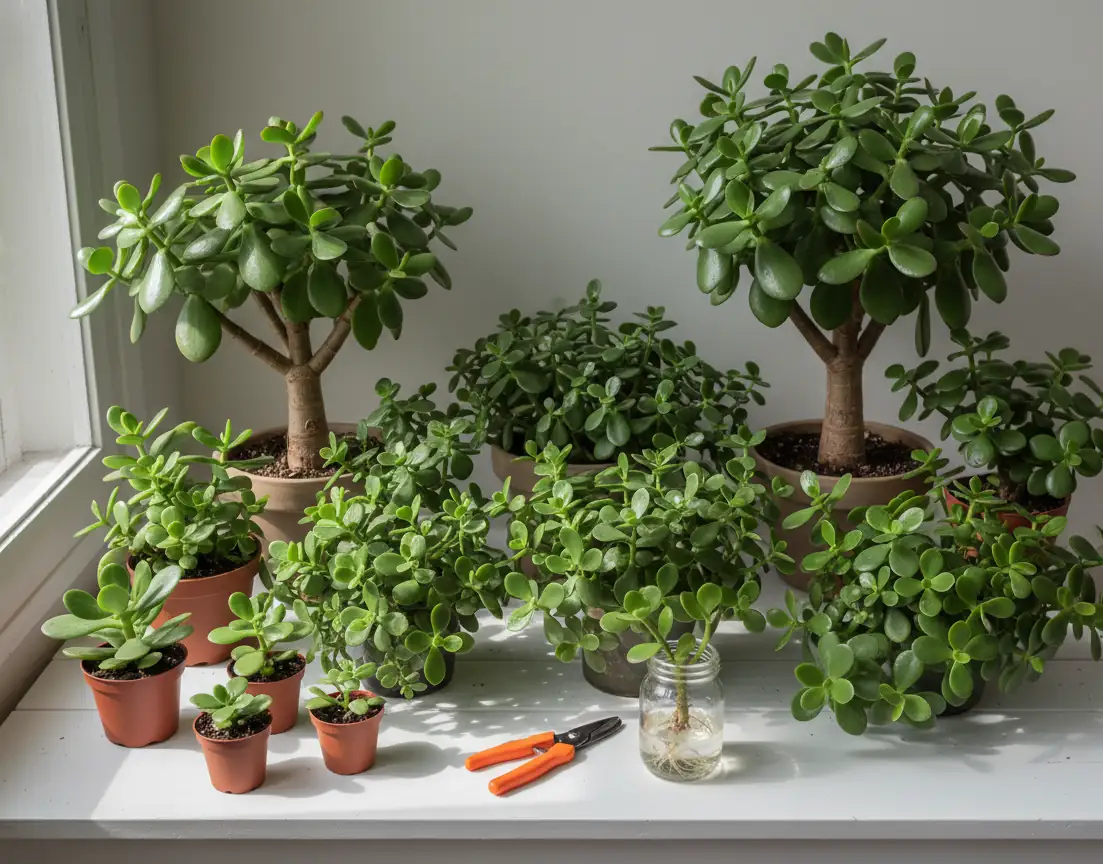
Why Propagate Jade Plants? More Than Just Growing New Greens
Jade plants (
Crassula ovata) are more than just resilient succulents; they are living symbols of good fortune and prosperity, making them cherished houseplants around the globe. Their sturdy trunks and vibrant green leaves bring a touch of natural beauty to any space, and best of all, they're incredibly forgiving and easy to care for. This resilience extends to reproduction, making jade plant propagation a rewarding endeavor for beginners and seasoned plant enthusiasts alike.
Learning
how to propagate jade plant opens up a world of possibilities. Imagine sharing miniature versions of your beloved plant with friends and family, offering a heartfelt, low-cost gift that carries deep symbolic meaning. Propagation also serves practical purposes: it's an excellent way to manage an overgrown jade, transform an unhealthy specimen, or simply expand your own indoor jungle. These fascinating plants naturally spread in the wild through detached leaves and branches, which readily root given sufficient moisture. Indoors, however, we can give nature a helpful nudge with a few simple techniques.
Understanding Jade Plant Propagation: Methods at a Glance
While propagating jade plants from seeds indoors is notoriously challenging due to the lack of natural pollinators, thankfully, there are three highly effective vegetative methods to increase your collection. Each method caters to different plant sizes, propagation goals, and even different levels of patience! Whether you're dealing with a colossal, decades-old specimen or a tiny sapling, there's a technique for you.
To fully master the art of expanding your jade collection, exploring all the nuances is key. For a comprehensive guide on all propagation aspects, see
How to Propagate Jade Plants: Your Complete Guide. To compare these methods in detail, check out
Jade Plant Propagation: Trunk, Stem, or Leaf? Compare Methods. Let's delve into the specific techniques that make jade plant propagation so accessible.
Trunk Division: For Mature, Established Giants
Trunk division is the go-to method for grand, mature jade plants that have developed multiple sturdy trunks or significant offshoots close to their base. It's often employed when a plant becomes overgrown, top-heavy, or you simply wish to create new, full-sized plants with existing root systems. This method is ideal if your goal is an immediate, larger plant rather than starting from scratch.
Typically, a jade plant needs to be at least 5-10 years old, sometimes even older, to have developed a substantial enough root system and trunk structure to warrant division. Look for large offshoots growing near the soil line that already have their own root development or a clear division point in the main trunk.
How to Propagate Jade Plant via Trunk Division:
- Preparation: Gently unpot the entire jade plant. Carefully brush away as much soil as possible from the root ball to expose the individual trunks and their root systems.
- Identify Divisions: Look for natural separation points where a trunk or large offshoot has its own established roots.
- The Cut: Using a sharp, sterilized knife or pruners, carefully separate the chosen section from the parent plant. Ensure each new division has a healthy portion of roots attached.
- Callus: Allow the cut surfaces to air dry and form a protective callus for several days (up to a week) to prevent rot.
- Replanting: Plant each new division into its own pot filled with a well-draining succulent potting mix. Water sparingly after a week or so, allowing the plant to settle.
This method offers the quickest route to another mature jade, but it requires a very established "donor" plant.
Stem Cuttings: The Versatile Choice for Pruning and Growth
Stem cuttings are perhaps the most popular and versatile way to propagate jade plants. This method is perfect for managing a jade that has become leggy, top-heavy with crisscrossing branches, or simply when you want to create new plants during routine pruning. It's a fantastic way to utilize what would otherwise be discarded material.
For successful stem propagation, your jade plant should ideally be over 5 years old, as older plants tend to produce more robust and viable stems that root easily. Younger plants may have thinner, less mature stems that are more prone to rotting.
How to Propagate Jade Plant via Stem Cuttings:
- Select a Stem: Choose a healthy, vibrant stem that is 4-6 inches (10-15 cm) long. Ensure it has at least two sets of leaves and a few nodes (the bumps on the stem where leaves emerge).
- Make the Cut: Use a sharp, sterilized knife or pruning shears to make a clean cut just below a node. Remove the lower leaves to expose about 1-2 inches of the stem for planting.
- Callus Formation: This is a crucial step! Lay the cuttings in a warm, dry spot away from direct sunlight for 3-7 days. This allows the cut end to heal and form a protective layer, significantly reducing the risk of rot.
- Rooting Medium:
- Soil: Plant the callused cutting directly into a pot filled with well-draining succulent soil mix.
- Perlite/Coco Peat: For better aeration and moisture control, you can root in 100% perlite or coco peat before transferring to soil.
- Water: While possible, rooting jade stems in water can sometimes lead to weaker roots or rot if not managed carefully. If using water, change it frequently.
- Initial Care: Once planted, wait about a week before providing a light watering. Keep the soil slightly moist, not soggy, and place the pot in bright, indirect light. Roots typically appear within a few weeks to a couple of months.
Stem cuttings offer a good balance between speed of growth and ease of execution.
Leaf Cuttings: Patience Rewards Tiny Beginnings (A Method for All Ages)
Leaf cuttings are the ultimate "last resort" or "first choice" method, depending on your situation. If your main jade plant is too young for stem division, suffering from severe root rot, or has bacterial soft rot on its stems, leaf propagation allows you to salvage the plant and create new life. It's also a wonderfully simple way for children or beginners to get started with plant propagation, as it requires minimal tools and can be very hands-on.
The key to success with leaf cuttings lies in choosing full-sized, mature leaves. These older leaves have larger energy and moisture reserves, which dramatically increases their chances of rooting and developing into new plantlets.
How to Propagate Jade Plant via Leaf Cuttings:
- Select Leaves: Gently twist a healthy, mature leaf from the main stem. Ensure the entire leaf, including the base (where it connects to the stem, often called a "node"), comes off cleanly. A small piece of the stem attached to the leaf base significantly boosts success rates.
- Callus: Place the detached leaves in a warm, dry spot away from direct sunlight for 3-7 days, allowing the broken end to callus over. This step is crucial for preventing rot.
- Rooting Substrate: Lay the callused leaves flat on top of a moist, well-draining succulent soil mix in a shallow tray or pot. You can gently press the base of the leaf into the soil, but don't bury it completely.
- Moisture and Light: Keep the substrate lightly moist, misting occasionally. Avoid overwatering. Place the tray in a location with bright, indirect light.
- The Waiting Game: Within a few weeks to a couple of months, tiny roots will emerge from the callused end of the leaf and grow into the soil. Soon after, tiny new jade plantlets will begin to sprout from the same area, above the soil line.
- Growth and Repotting: This is the slowest method. New shoots might only grow 2-4 inches (5-10 cm) per year, taking up to two years to resemble a small jade plant. Once the original leaf shrivels and the new plantlet is robust enough, you can gently repot it.
While slow, the sight of a tiny jade emerging from a single leaf is incredibly rewarding and demonstrates the plant's remarkable life force.
Essential Supplies and General Tips for Success
Regardless of which method you choose, a few basic supplies and overarching principles will set you up for success:
- Sharp, Sterilized Tools: Always use a clean, sharp knife or pruning shears. Sterilize them with rubbing alcohol before and after each use to prevent the spread of diseases.
- Well-Draining Potting Mix: Jade plants thrive in soil that drains quickly. A specialized succulent or cactus mix is ideal. You can also create your own by mixing regular potting soil with perlite or coarse sand.
- Pots with Drainage Holes: Essential to prevent waterlogging and root rot.
- Rooting Hormone (Optional): While not strictly necessary for jade plants, a dab of rooting hormone powder can sometimes accelerate root development, especially for stem cuttings.
- Patience is Key: Jade plant propagation is a slow process, especially for leaf cuttings. Don't be discouraged if you don't see immediate results. Some roots can take weeks or even months to appear.
- Bright, Indirect Light: Cuttings need light to photosynthesize and grow, but direct, intense sunlight can scorch them before they establish roots.
- Allow Callusing: This cannot be stressed enough. Allowing cut ends (for stems and divisions) and snapped leaf bases to dry and form a callus is vital for preventing fungal infections and rot.
- Water Sparingly: Before roots form, cuttings don't absorb much water. Overwatering will lead to rot. Once roots appear, water only when the soil is completely dry.
Conclusion
Propagating jade plants is a deeply satisfying experience, offering a tangible connection to nature and a practical way to expand your plant collection or share with loved ones. Whether you're dividing a venerable old giant, taking stem cuttings from a thriving specimen, or coaxing life from a single leaf, each method reveals the incredible resilience of these beloved succulents. Experiment with the different techniques to discover what works best for you and your plants. Soon, you'll be an expert in
how to propagate jade plant, enjoying the endless bounty these symbols of good fortune have to offer.